As a Victorian business owner, you know that safety is a priority. But when it comes to electrical appliances, there is often confusion. Is “Test and Tag” actually a legal requirement, or just a “best practice”?
We hear this question from clients in Geelong, Werribee, and across Melbourne every day. The short answer is: Yes, ensure your workplace is electrically safe is mandatory.
While the law doesn’t always use the exact phrase “Test and Tag,” the regulations make it clear that regular inspections are the only practical way to meet your legal obligations.
Here is a simple breakdown of what Victorian laws say, and what you need to do to stay compliant and protected.
1. The Victorian OHS Act (The “Big Rule”)
The overarching law in our state is the Occupational Health and Safety Act 2004 (Vic). Section 21 states that employers have a duty of care to provide and maintain a working environment that is safe and without risks to health.
This includes the electrical equipment your staff use. If an employee is shocked by a faulty kettle or a frayed extension lead that you failed to check, you are in breach of your duty of care.
In simple terms: You are legally required to ensure your electrical equipment is safe.
2. The “Hostile Environment” Rule
WorkSafe Victoria refers to the national standard, AS/NZS 3760:2022, as the benchmark for how to meet that duty of care. This standard introduces the concept of a “hostile operating environment.”
A hostile environment is anywhere equipment is exposed to heat, moisture, dust, vibration, or damage. In these areas, regular testing and tagging is considered essential.
Is your workplace a “hostile environment”?
- YES: Construction sites, workshops, factories, warehouses (like those in Sunshine or Tullamarine), commercial kitchens.
- SOMETIMES: Busy retail stores or schools where leads can be easily damaged.
- NO: A clean, quiet office where leads are tucked behind desks and never moved.
Important: Even in a “non-hostile” office, you still have a duty of care. While testing might be less frequent (e.g., every 5 years), a visual inspection and risk assessment are still required.
3. Construction Sites have Stricter Rules
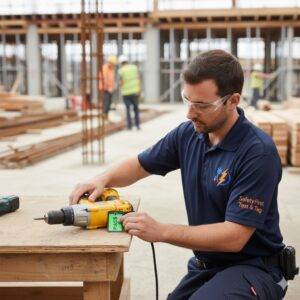
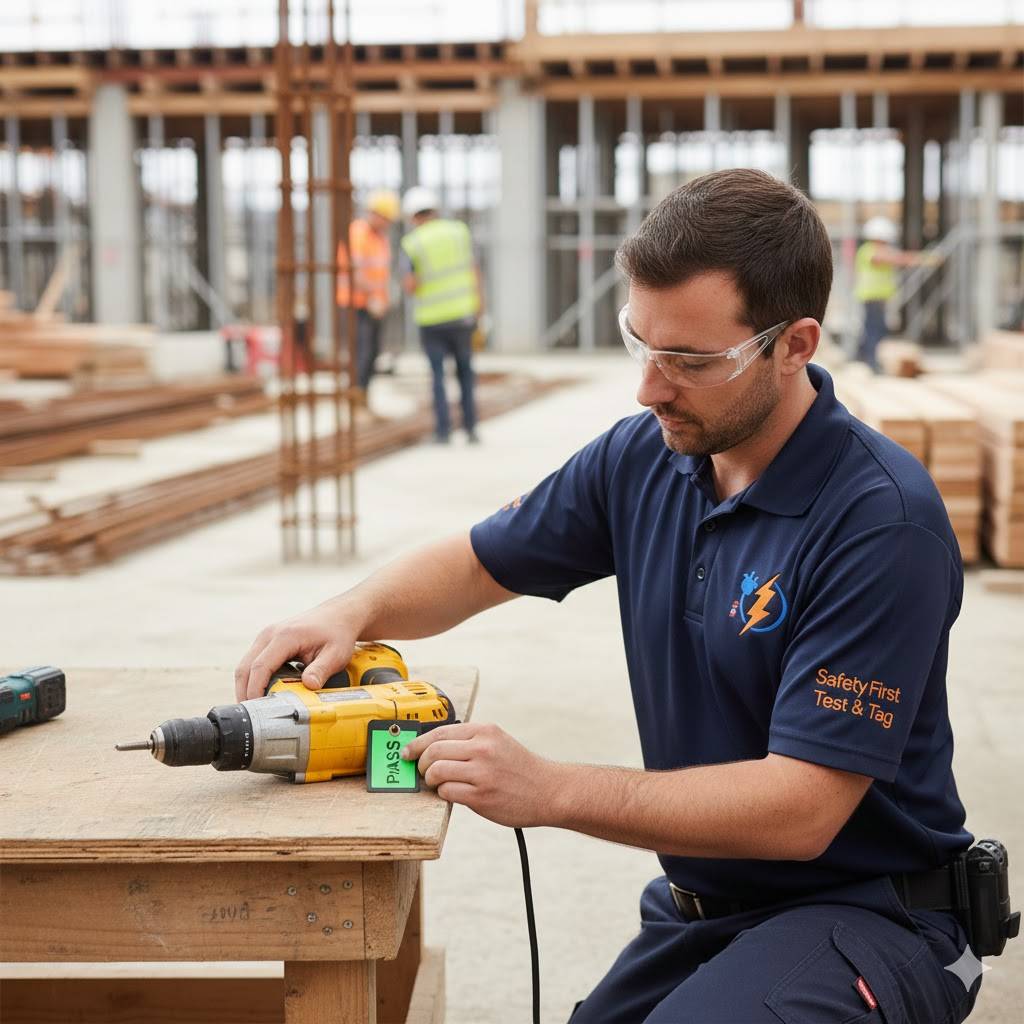
If you work in construction, the rules are black and white. Under AS/NZS 3012, all portable electrical equipment on a construction or demolition site must be tested and tagged every 3 months.
Each period has a specific tag color (Red, Green, Blue, or Yellow) to show at a glance that the tool is compliant for that quarter. Using untagged equipment on site can lead to immediate fines and shutdowns.
Why a Visual Check Isn’t Enough
You might think, “I’ll just look at the lead; if it looks fine, it is fine.” Unfortunately, that is not true.
While our technicians start with a visual check, many dangerous faults are invisible. An appliance might look brand new on the outside, but have a detached earth wire inside. Without a proper electrical test using calibrated equipment, you would never know. That “safe-looking” appliance could deliver a severe shock the next time it’s used.
How to Ensure You Are Compliant
Don’t risk a WorkSafe fine, or worse, an injury to your staff. A professional Test and Tag service is the easiest and most affordable way to meet your OHS obligations.
At Safety First Test and Tag, we provide:
- Qualified Technicians: Fully trained to AS/NZS 3760 standards.
- Comprehensive Register: A detailed digital report listing every item tested, perfect for audits and insurance.
- Local Service: We are a Victorian team servicing Geelong, Melbourne, and surrounding suburbs.
- Combined Services: We can test your Fire Extinguishers and Emergency Lights in the same visit to save you time and money.
Ready to get compliant? Call our local team today on 1300 710 873 or request a free quote online.