Running a rooming house in Victoria is no small feat. Between managing tenant relationships, property maintenance, and keeping up with the Residential Tenancies Act, it often feels like a constant juggling act. It is completely understandable to feel overwhelmed by the sheer volume of compliance rules across different local councils, from Wyndham to the City of Greater Geelong.
However, when it comes to fire safety, there is absolutely zero room for error. The regulations set by Consumer Affairs Victoria (CAV) and the Victorian Building Authority (VBA) are strict for a reason: rooming houses (defined as buildings where four or more people rent rooms) present a higher risk for fire emergencies due to shared living spaces and multiple occupants.
If you operate a rooming house anywhere from the Melbourne CBD down to Connewarre and the Surf Coast, installing the correct fire extinguishers and fire blankets isn’t just a recommendation—it is a legal obligation. Here is a straightforward guide to getting it right.
🍳 The Kitchen Lifesaver: Fire Blanket Requirements
A significant number of house fires start in the kitchen, making it the most critical zone in your rooming house. Fire blankets are highly effective for smothering cooking fat and oil fires.
What Victorian operators need to know:
- The Standard: Any fire blanket installed must meet the Australian Standard AS/NZS 3504:2006.
- Size Matters: The blanket must measure at least 1 metre x 1 metre.
- Strategic Placement: A common misconception is that fire blankets should be mounted right next to or directly above the stove. Do not do this. If a stove fire erupts, the flames will prevent tenants from reaching the blanket. Instead, mount it on a wall near the kitchen doorway. This allows an occupant to grab it safely while keeping an escape route open.
- Single Use: Fire blankets must be replaced immediately if they are ever used.
🧯 Fire Extinguishers: Coverage and Classification
Under the Building Code of Australia (BCA), rooming houses (typically classified as Class 1b or Class 3 buildings) must have essential safety measures in place. This includes portable fire extinguishers.
You cannot simply buy any extinguisher off the shelf; you need the right type for the specific hazards in your property to remain compliant with Victorian regulations.
Quick Reference: Equipment by Hazard Area
| Hazard Area | Primary Fire Risk | Recommended Equipment | Placement Note |
| Communal Kitchens | Cooking oils and fats (Class F) | Fire Blanket & Wet Chemical Extinguisher | Near the kitchen exit, strictly away from the stove |
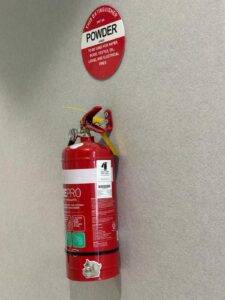
| Hallways & Bedrooms | Wood, paper, textiles (Class A) | Water or Dry Powder (ABE) Extinguisher | Along escape routes and corridors |
| Switchboards / Laundry | Electrical fires (Class E) | Carbon Dioxide (CO2) or Dry Powder (ABE) Extinguisher | Near main electrical panels or heavy appliances |
(Note: Extinguisher placement and signage must strictly comply with AS 2444.)
📋 The Compliance Trap: Installation vs. Maintenance
One of the biggest mistakes rooming house operators make in Melbourne and Geelong is assuming their job is done once the equipment is screwed to the wall.
In reality, fire safety equipment in commercial and rental environments falls under AS 1851 (Routine service of fire protection systems and equipment). This means your fire extinguishers and fire blankets must be inspected and maintained regularly by a qualified professional.
Your ongoing maintenance checklist:
- Six-Monthly Inspections: Extinguishers and blankets generally require professional inspection every six months to ensure they are pressurized, accessible, and undamaged.
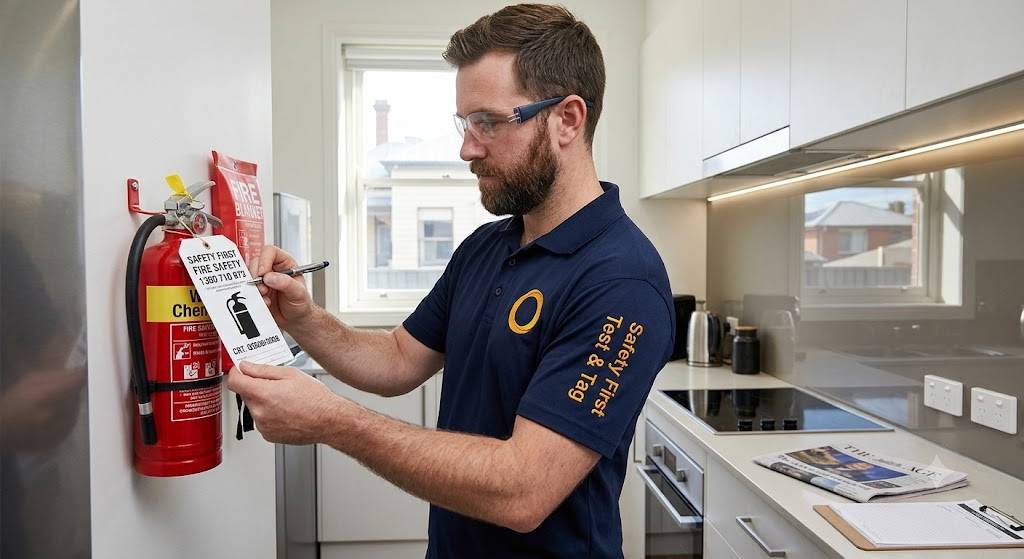
- Maintenance Tags: Every piece of equipment must have a metal or durable plastic tag attached. At Safety First Test & Tag, every extinguisher we service receives our official compliance tag (featuring CRT. Q5508/3008), clearly stamping the date of the last inspection, the tester’s details, and the next retest date.
- Clear Instructions: Ensure the operating instructions on the front of the equipment are completely legible and facing outward.
🚨 Beyond the Extinguisher: Other Non-Negotiable CAV Standards
While extinguishers and blankets are vital for fighting a fire, early detection and safe evacuation are even more critical. To remain compliant with Consumer Affairs Victoria, ensure you are also maintaining the following:
- Hard-Wired Smoke Alarms: Rooming houses must have hard-wired smoke alarms installed. They cannot be battery-only standalone units.
- Evacuation Diagrams: A clear evacuation diagram that complies with AS 3745 must be prominently displayed in every resident’s room and in all shared common areas.
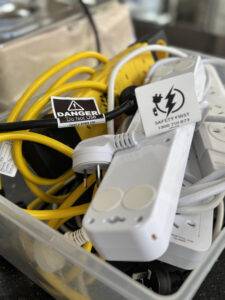
- Routine Safety Checks: You must have all gas installations checked by a licensed gas fitter, and all electrical appliances and switchboards checked by a licensed electrician/tester, at least once every two years.
🛡️ Keep Your Property and Tenants Safe with Local Experts
Navigating rooming house standards can be a headache, but viewing fire safety as an investment rather than a chore changes the perspective. Proper equipment and routine AS 1851 maintenance protect your property from devastating damage and save lives.
Whether your rooming house is located in Wyndham Vale, Truganina, Werribee, or Geelong, the certified team at Safety First Test & Tag is local and ready to help. We provide non-disruptive, comprehensive fire equipment and electrical safety audits specifically tailored for multi-tenant properties.
Don’t risk your license or your tenants’ safety. Book your rooming house compliance audit today:
📞 Call: 1300 710 873
✉️ Email: [email protected]
🌐 Visit: www.safetyfirsttesttag.com.au
www.safetyfirstfiresafety.com.au